
Bridging the Gap for Breast Cancer Diagnostic Testing
Currently, most health insurance plans cover the full cost of annual breast screenings and breast cancer treatment, but not the step in-between: diagnostic testing. This means if a patient’s regular, preventative screening, like a mammogram, shows something that needs follow up imaging, next steps such as an MRI or ultrasound come with additional expenses for many patients. When a doctor orders a follow-up to investigate a suspicious finding, patients should not be forced to choose between paying hundreds and even thousands of dollars out-of-pocket or skipping the exam altogether. For patients already facing fear and uncertainty, these financial barriers can delay or prevent lifesaving diagnoses.
What Are Diagnostic and Supplemental Breast Exams?
Diagnostic Breast Examination: A medically necessary follow up exam such as a diagnostic mammogram, breast MRI, ultrasound, or biopsy used to evaluate an abnormality seen or suspected from a prior screening or detected by another means of examination.
Supplemental Breast Examination: A medically necessary exam (including breast MRI or ultrasound) used to screen for breast cancer. Some patients, such as those with dense breast tissue or a family history of breast cancer or other causes of a high personal risk of breast cancer, are recommended this extra imaging beyond either their routine annual mammogram or sometimes to start those routine annual screenings at an earlier age.
Preventive screening mammograms are already covered at no cost under the Affordable Care Act but diagnostic and supplemental breast exams, which are often the critical next step after a screening, are not. This gap in coverage puts patients at serious financial and medical risk.
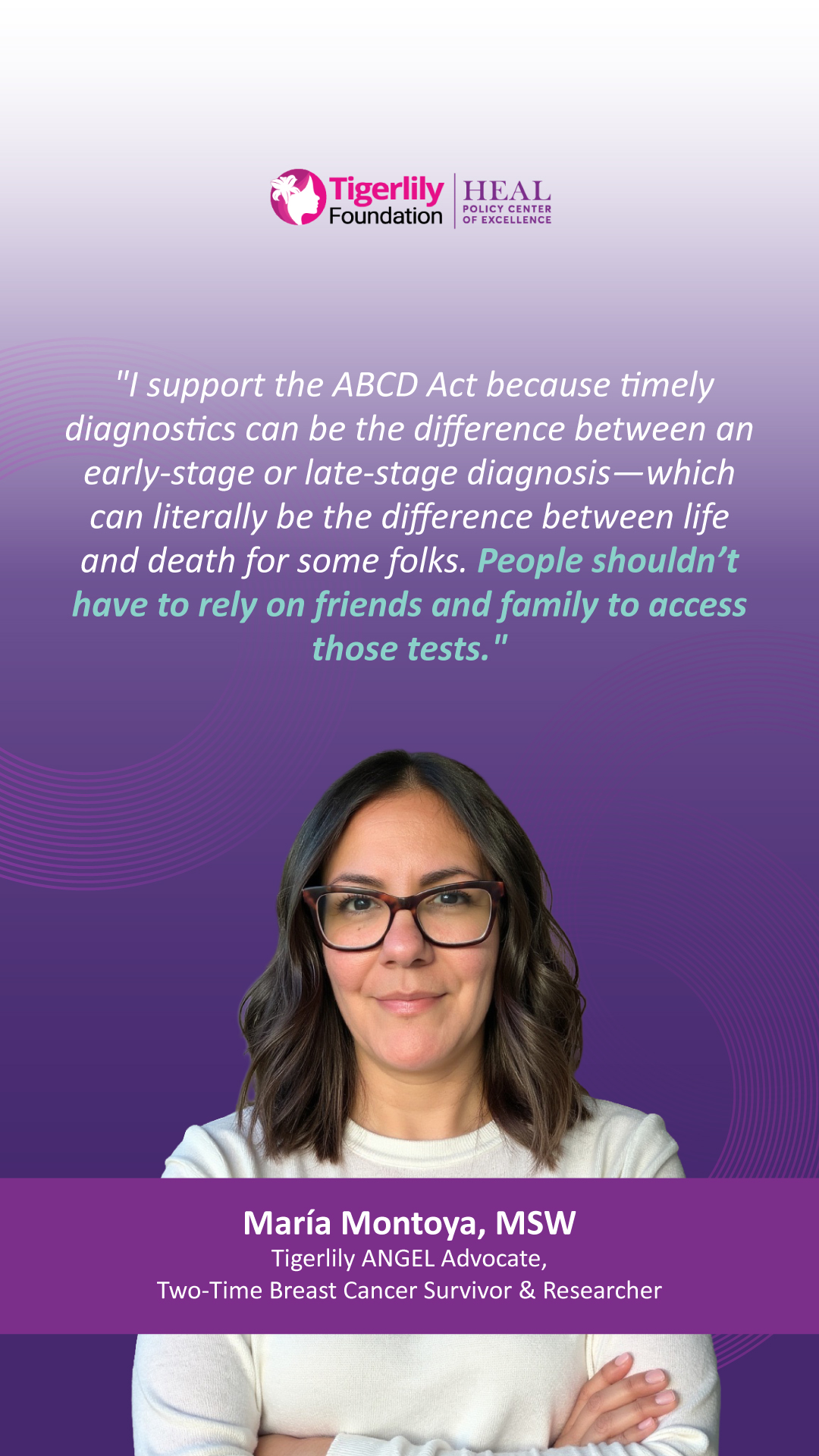
The ABCD Act: Closing the Coverage Gap
The Access to Breast Cancer Diagnosis Act of 2025 (H.R.3037/S.1500) is a bipartisan bill introduced in the 119th Congress. It requires private health insurance plans to cover follow-up (diagnostic) and supplemental breast exams when medically necessary with no extra charges to patients. No bills, no fees, no surprises.
The bill applies specifically to private insurance and high deductible plans. It does not apply to Medicare or Medicaid, which operate under separate rules.
What the ABCD Act Requires
Health plans covered by the bill must:
- Cover the full cost of medically necessary diagnostic and supplemental breast examinations ensuring no patients are stuck paying out-of-pocket expenses for the tests they need.
- Apply these protections to grandfathered health plans, closing a loophole that has shielded older plans from similar coverage requirements.
Early detection saves lives but only when patients can access the imaging their doctors order without financial penalty.
Cost Sharing Delays Diagnosis
A patient who receives an abnormal mammogram faces an immediate, urgent need for follow-up imaging. If that next step comes with a $300 price tag or even a $150 copay, many patients delay or forgo it entirely. Delays in diagnosis can allow time for cancer to progress potentially from a treatable early stage to a later, harder to treat stage with worse outcomes and higher total costs.
High-risk Patients Bear the Greatest Burden
Patients with a family history of breast cancer, dense breast tissue, or other elevated risk factors are often recommended supplemental screening exams beyond the standard annual mammogram. These patients who need additional imaging the most are currently the most exposed to extra costs, creating a cruel paradox: the higher your risk, the more you may pay.
It Puts Doctors’ Recommendations First
Physicians spend years training to understand which patients need which tests and when. Cost-sharing requirements effectively allow insurers to override clinical judgment by making the recommended exam unaffordable. The ABCD Act restores the doctor-patient relationship by ensuring that when a physician orders a breast exam, the patient can receive it without cost standing in the way.
Tigerlily Foundation is a proud member of the Alliance for Breast Cancer Policy and participates in its efforts to support the ABCD Act. Visit the Alliance’s website for more resources and information on the ABCD Act: https://allianceforbreastcancerpolicy.org/
Take Action
The ABCD Act needs your support. Whether you are a patient, caregiver, healthcare provider, or concerned citizen, there are meaningful steps you can take right now.
Write to Your Legislator
Send a personalized letter urging your members of Congress to cosponsor and support the ABCD Act. Your message matters! Constituent voices are among the most powerful tools in advocacy.
Share Your Story
Have you been affected by your out-of-pocket costs for breast cancer diagnostic tests or supplemental screenings? Your story is important to help educate our community and policy makers. Please consider sharing it with us so we can bring it to Capitol Hill and our community. Please email HEAL@tigerlilyfoundation.org to share your story.
Spread the Word
Share information about the ABCD Act on social media and with your networks. The more voices behind this legislation, the stronger the push for passage.